Désolé, cet article est seulement disponible en English.
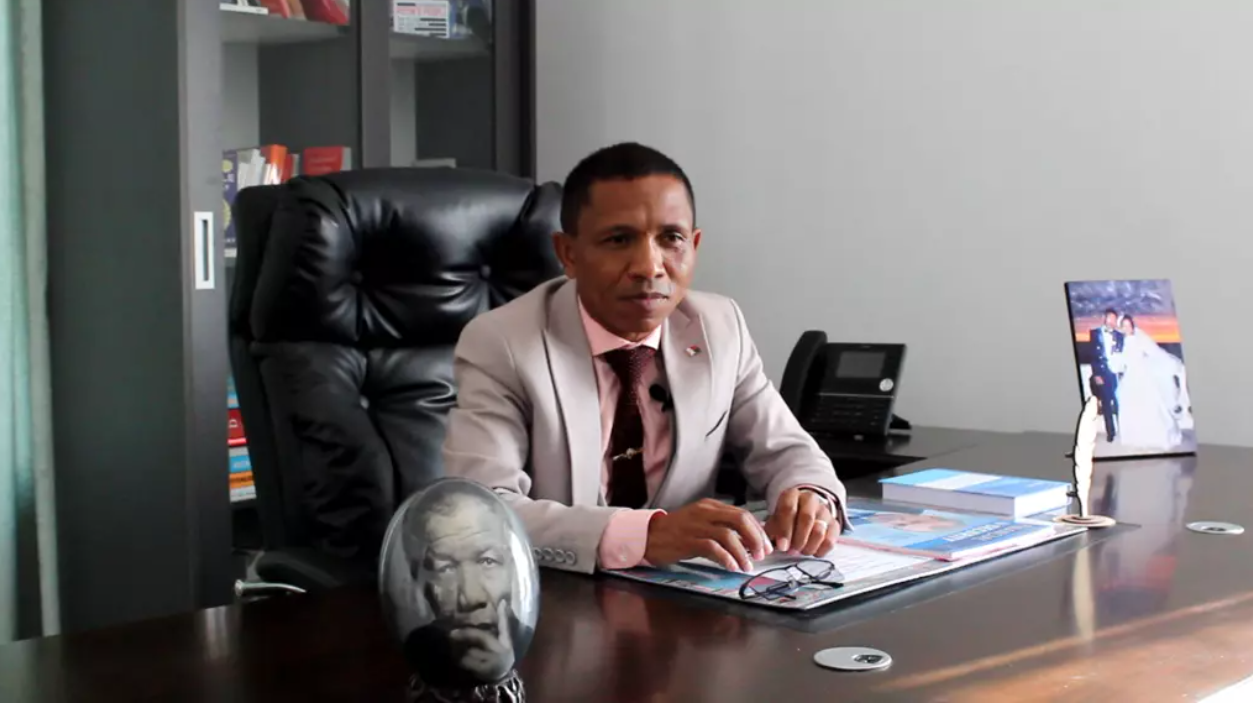
Mamitiana Rajaonarison has been appointed Madagascar’s new prime minister.
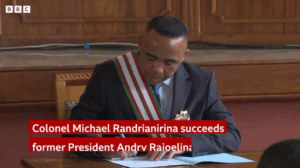
Malagasy head of state, Michael Randrianirina announced the appointment a little over a week after dismissing the entire Malagasy government on 9th March.
He said that the new government, expected to be announced next week, will have to pass lie detector tests in order to be interviewed by him and Rajaonarison.
He said: ‘The Malagasy nation needs bold decisions. We are now at a turning point. This country needs a person of integrity, a person of principle, incorruptible and who cannot be bought with money.
‘We have decided to use a polygraph. It is with this polygraph that the background integrity checks will be carried out.
‘We will know who is corrupt and who can help us, who is going to betray the youth struggle.
‘We’re not looking for someone who is 100% clean, but over 60%. That way, Madagascar will finally be able to develop.’
Rajaonarison is a former senior gendarmerie officer but best-known in Madagascar as the country’s anti-corruption chief, having headed the Malagasy Financial Intelligence Unit (SAMFIN) which combats money laundering, terrorism financing and other illicit financial behaviour, since 2021.
Randrianirina, who came to power last October as a result of national protests and an uprising against the Malagasy government of Andriy Rajoelina inspired by widespread regular water and electricity supply cuts, has not explained why he fired the government, which he had appointed.
But some, including a manage of the social media accounts of Gen Z Madagascar, which led the protests last October, have expressed scepticism at the use of polygraphs.
‘It’s not even scientifically proven to work,’ he said. ‘For me it’s just a joke and embarrassing.
‘We agree that the previous ministers weren’t good. We still have hope for the new ministers, but in general I think this regime is already better than the regime of Rajoelina.’
In the last month, Randrianirina has met with the Russian and French governments to discuss partnership and economic deals.
France and Madagascar have agreed to start the modernisation of the Port of Antsiranana, and the French government has expressed a desire to work more closely with Madagascar on education, agriculture and development.
In December, Russian instructors and more than 40 crates of military hardware including sniper rifles and kamikaze drones were reportedly dispatched to Madagascar, while armed personnel have been deployed to provide close protection for Randrianirina.
The Russian government has also expressed interest in closer working relationships with the Malagasy government, including in development and port improvements.
In both cases, commentators have noted reasons for caution as well as optimism: France is the former colonial occupier of Madagascar, and seeks to maintain ‘influence’ in the Indian Ocean, while some suggest Russia, too, wishes to enter the region, perhaps as a ‘counter’ to ‘NATO presence’ there.


 English
 Malagasy
 Cymraeg