Désolé, cet article est seulement disponible en English.
One impact of Malagasy youngsters no longer being able to live with their families, alongside poverty, living on the streets and exposure to significant risk, can be the disruption and potential end of their education. Rano Soloniaina, a resident at the AAB centre, explains how he and the Money for Madagascar partner organisation have worked to make sure he could return to school, and thrive.
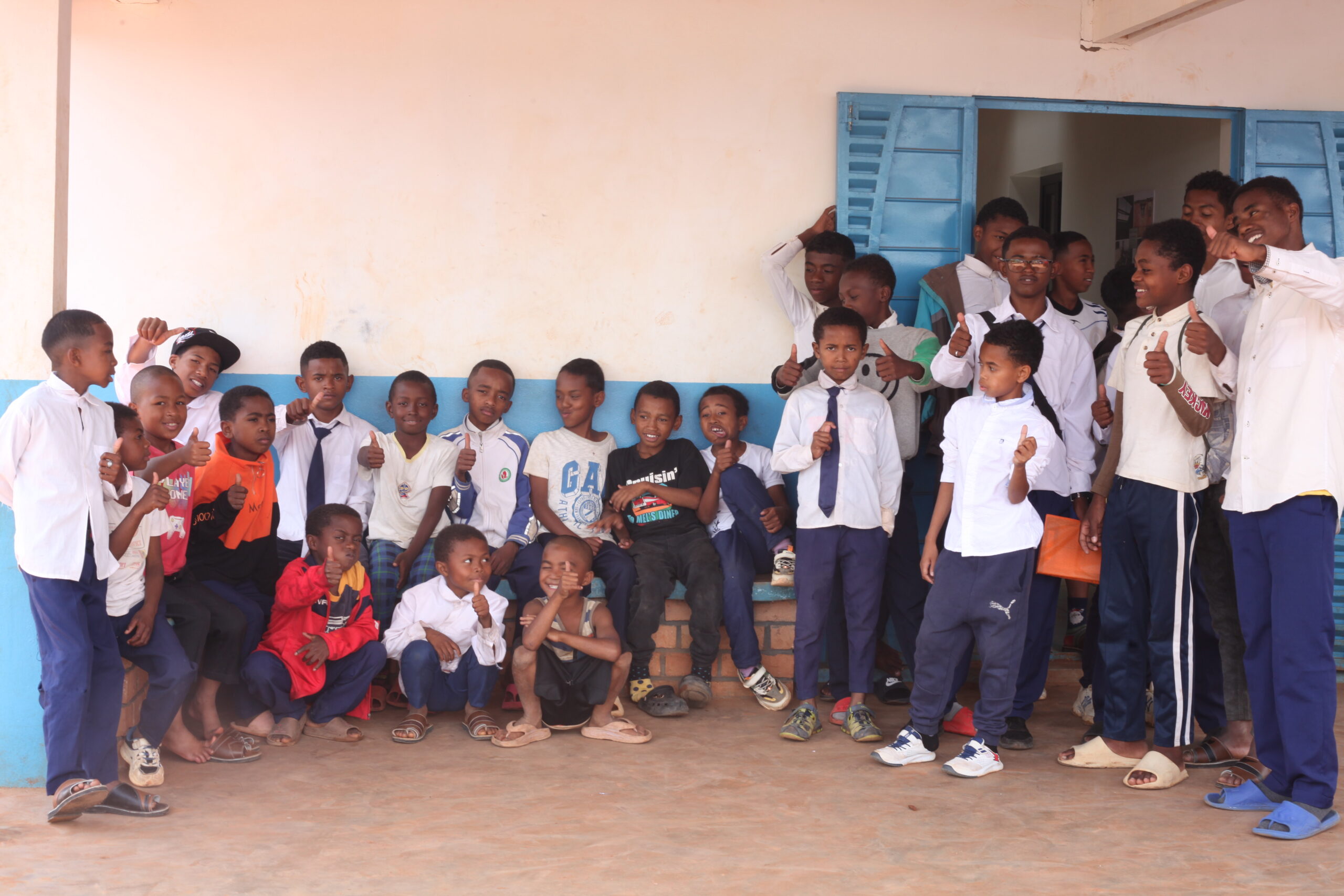
The AAB centre, on the outskirts of the Malagasy capital Antananarivo, is an important partner of Money for Madagascar, which provides shelter, clothing, food, water, healthcare, access to education and care and attention to boys unable to live with their families.
Rano Soloniaina, 16, joined the AAB centre in 2021. Family problems had forced him to drop out of school, but his work with the centre has enabled him to return.
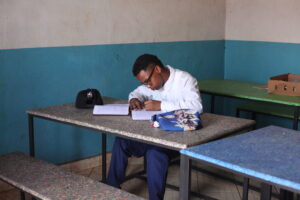
He explained: ‘When I arrived at the centre, I was no longer attending school because I had had to stop in the 11th grade because of family difficulties. I was 12 years old at the time.
‘Today, I am really proud to have been able to return to school thanks to the help of the AAB centre.
‘I passed the official exam of the Certificate of Elementary Primary Studies (CEPE) last year, and I am now in the sixth grade. I don’t feel self-conscious even though I’m the oldest in my class. On the contrary, it motivates me more to succeed in life, because I never even imagined that I would one day be able to go back to school.
‘Thanks to donations from the benefactors who support the centre, our library has been equipped with new tables, chairs and shelves, which we lacked before. I can now learn my lessons and do my homework in a calm environment that is conducive to concentration. Before, we had to study in the refectory, because it was the only place where there were tables and chairs for everyone.
‘I am happy to live at the centre, as we receive a lot of attention and help from many generous people who are constantly concerned about our well-being and happiness.‘
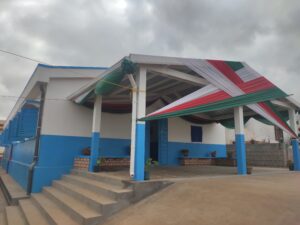
The AAB Centre, thanks to its staff and donors from around the world, including Money for Madagascar and you, our supporters, opened a new dormitory for 48 boys in June this year. This replaced the centre’s previous dormitory which had been destroyed by fire.
Rano said:
‘I would also like to thank those who financed the renovation of the dormitory, which is now more pleasant to live in. We feel safer, as each room now has its own door, and the interior is clean and tidy thanks to the shelves, small table and chair we were given to study. The educators hold a competition for the cleanest and most well-maintained rooms, which encourages everyone to keep our rooms tidy.
‘We are really happy to live here, because it improves our living conditions considerably. We were also taught how to make soap, and now we know how to make it ourselves. We no longer buy it to wash our clothes: we only use the one we make. The educators also hold a competition for the best garden per room, which has given us a taste for gardening, and the harvests have enriched our diet.
‘There are 40 of us living at the AAB centre, and we feel happy there, because we receive an education that allows us to flourish intellectually, physically, morally, and especially spiritually. Our community is great because, through the education and training we received at the centre, we have learned to love and help each other in all circumstances.’
AAA,
AAB,
Antananarivo,
Boys' Centre,
Children for the Future,
community,
dormitory,
education,
homelessness,
Madagascar,
reading,
school


 English
 Malagasy
 Cymraeg