Miala tsiny fa tsy mbola misy amin’ny teny malagasy ity lahatsoratra ity.
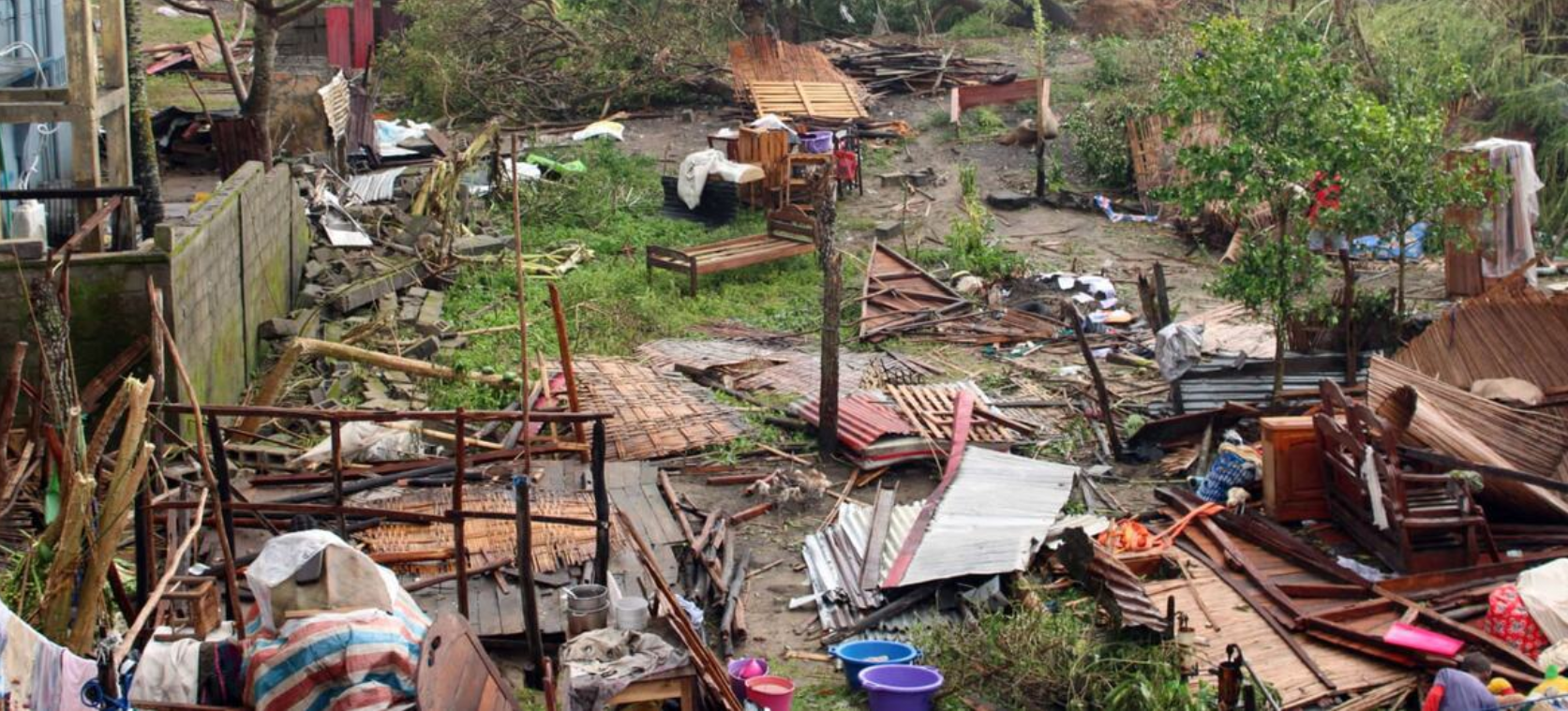
One week after it struck Eastern Madagascar, Cyclone Gezani is believed to have forced more than 16,000 men, women and children to leave their homes, and affected more than 270,000 people in total.
Gezani made landfall in Madagascar’s largest port city, Toamasina, last Tuesday (10th February).
It has killed at least 38 people, and injured 374, though both numbers could be considerably higher, as access to the city and its surroundings has been disrupted by the storm.
Its winds reached 155 mp/h, and the cyclone has devastated Toamasina, a city of around 500,000 people.
It damaged the city and its surrounding region’s power connections and generation to the extent that supply is at about five per cent of its usual – already low – levels.
This power disruption and physical damage to pipelines is also disrupting water supply, increasing the risk of water-borne disease outbreaks.
Gezani has damaged around 80 per cent of the city’s infrastructure and buildings, including both university hospitals and 21 health centres, with cold-chain vaccine supplies disrupted in at least two centres, reducing access to lifesaving care and provisions.
Organisations in the city – including UN bodies – also report that around 29,000 children have been unable to attend school, and warn of rising protection concerns for vulnerable groups including women, children, the elderly and people with disabilities.
As we noted late last week, Gezani’s path of destruction means that at least 52 Malagasy people have been killed by cyclones and storms in this year’s cyclone season, following 14 deaths late last month caused by cyclone Fytia, which injured or affected at least 54,000 more people.
Cyclones and tropical storms are not new in Madagascar: the season comes every year, and lasts from November to April.
But climate experts report that the storms have increased in power and intensity in recent years, driven by climate change.
And the impacts of that – deaths, injuries and survivors losing their homes, possessions and farmland in Madagascar – are a particularly bitter irony because Madagascar is one of the world’s few ‘carbon sinks’, one of only four countries on Earth which emits less carbon than it absorbs from the atmosphere.
The Malagasy government is correct to call for international assistance to respond to the devastation wrought by cyclone Gezani, but the word can and must do more.
We are teetering on the brink of global climate catastrophe, and countries like Madagascar are those feeling the harshest effects of that catastrophe’s approach.
With your support, we are already working with Malagasy partner organisations and Malagasy people to support their efforts to protect their vital, vibrant, areas of wilderness, but they cannot – and should not be expected to – prevent global disaster alone.
We must come together to end practices which threaten us all, and are already killing and otherwise severely harming innocent men, women and children.
If you can, please:
-
share this story
-
refuse to buy products produced in ways harmful to the planet on which we live
-
and use your voice: tell others what you are doing, and why, and call on your elected representative to take a tougher stand against practices which threaten us all, and are already killing Malagasy men, women and children
Aid,
Biodiversity,
climate,
climate catastrophe,
climate change,
community,
conservation,
development,
displacement,
environment,
Environmental News,
homelessness,
Madagascar,
Malagasy,
power,
Taomasina,
water


 English
 Cymraeg
 Français