Miala tsiny fa tsy mbola misy amin’ny teny malagasy ity lahatsoratra ity.
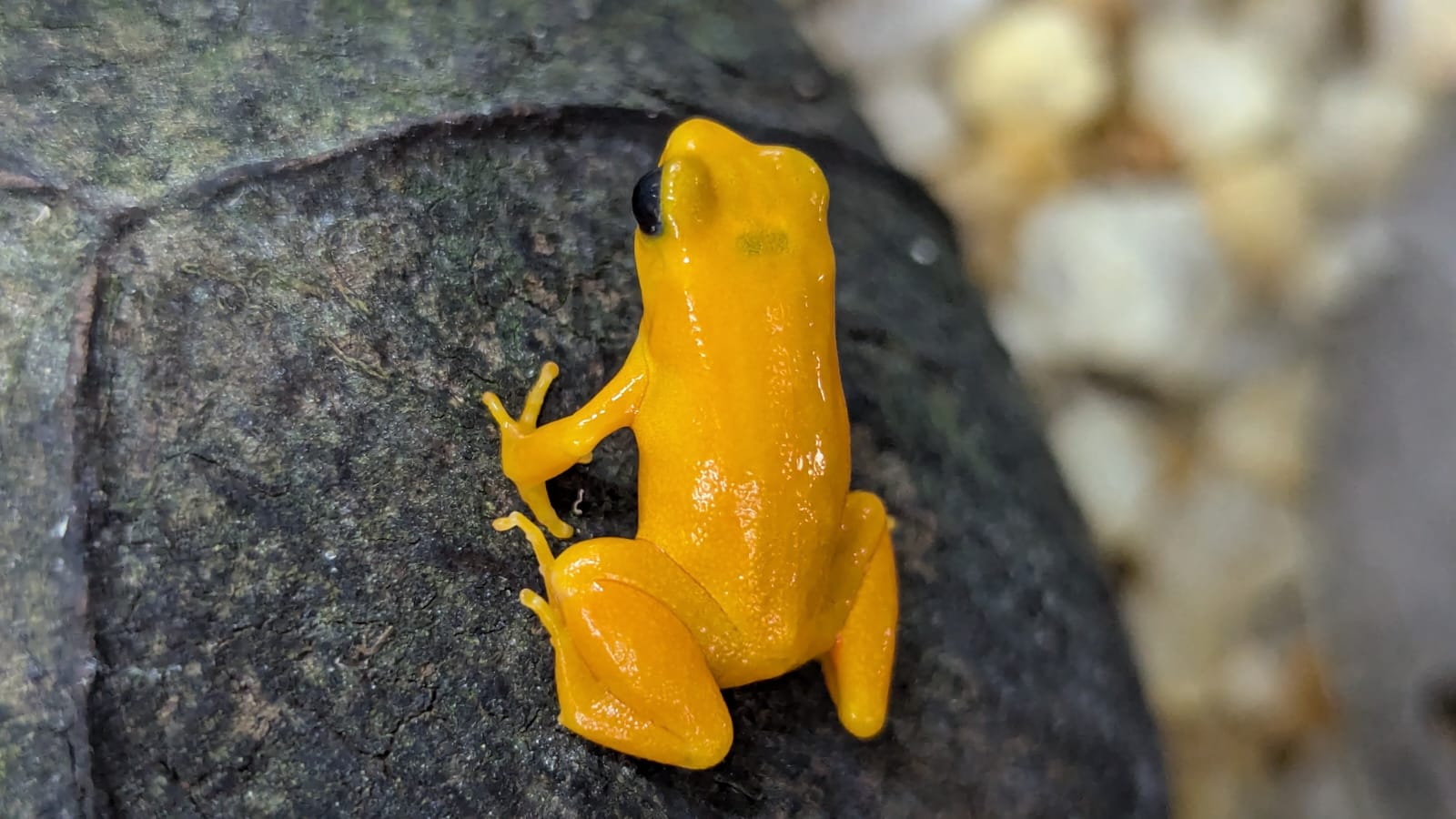
Friday 20th March is world frog day, an international initiative designed to raise awareness of frogs and other amphibians.
We at MfM are happy to celebrate the frog (and its cousins), including because Madagascar is a vital frog hotspot, containing habitats in which frogs found nowhere else on Earth live and thrive.
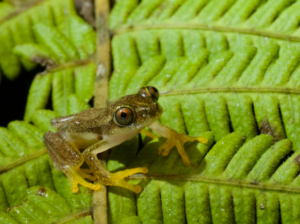
Madagascar is home to well over 500 species of frogs, of which so far 340 have been listed and described in detail. More than 200 still need to be formally described.
Of the 340 species which have been described, more than 200 are endemic to Madagascar. That means that ten per cent of all species of frog found anywhere on Earth are found only here. Madagascar is only 0.4 per cent of the Earth’s land area.
And those figures are changing all the time. Seven new species of frog were discovered in 2024, and in September last year, the Love’s Great Stream Frog was discovered, in the Domain de la Cascade Plantation Lansargues nature reserve.
But as we noted in our update about that discovery, Madagascar’s frog populations are under constant threat.
Of the 340 described species in Madagascar, 158 are threatened, and at least 20 are critically-endangered.
As we said about the discovery of the Love’s Great Stream Frog:
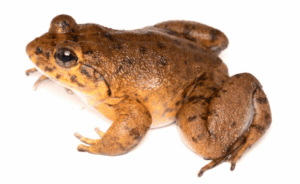
‘While the discovery of Love’s Giant Stream Frog represents a significant advancement in herpetology, it also underscores the fragile state of Madagascar’s forest ecosystems, and points to the fact that the island’s protected and unprotected wilderness regions pay a vital role in safeguarding the unknown, as well as the catalogued, extraordinary Malagasy flora and fauna.
‘Researchers responding to the discovery’s announcement called immediately for continued conservation efforts to protect low-elevation rainforest streams from deforestation and habitat fragmentation.
‘And they did so with good reason.’
Because beyond its extraordinary frog population, Madagascar is home to five per cent of the world’s known species, of which 80-90 per cent are endemic: found only here.
But the island’s deforestation rate is the world’s fourth-highest. It has already lost 80 per cent of its natural areas and loses around 200,000ha. each year. At the current rate, its forests will be completely gone within 40 years.
More than 3,900 Malagasy plant and animal species are threatened, 600 of which are endangered. The ‘level’ of ‘risk’ above ‘endangered’ is extinct.
The world relies upon Madagascar’s forest and wilderness areas. But even if it did not, these areas of extraordinary vibrance and beauty, and all the species within them, have a right to exist, at least as great as our own.
That’s why, even as we work to provide Malagasy communities with the platform to define the challenges which face them, and formulate and deliver the solutions to them, we also ensure they can lift themselves from poverty and hunger in ways which and/or as well as protecting and expanding the extraordinary Malagasy wilderness, and all it contains.
We, along with our partners Sadabe, the University of the West of England and the Regen Network, funded by the UK government’s Darwin Initiative, are working with 1,000 farming families living on the edge of the Tsinjoarivo-Ambalaomby Protected Area.
The 26,500-hectare site, is in the Malagasy Central Highlands and is effectively, because of its elevation, an ‘island’ of exceptional biodiversity.
It is home to endangered species of frog, lemur, ducks, fish, palms, and orchids.
Our five-year project, which began in January, is tackling drivers of deforestation by empowering local communities to become architects and managers of their own conservation future.
We are establishing an ‘Environmental Stewardship Scheme’ where farmers are rewarded for implementing sustainable land management practices, funded by the global sale of verified biodiversity and ecosystem credits.
And we are training 1,000 farming families in climate-smart, regenerative agriculture to improve food security and reduce pressure on the forest, co-create with them a ‘menu’ of wildlife-friendly options and allied payments with local communities, and restore 800 hectares of degraded land in the buffer-zone through reforestation and agroforestry.
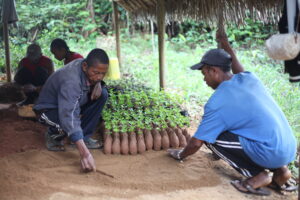
We are working so that Malagasy people can formulate and deliver their own solutions to the challenges they face, and can protect and grow their wilderness and the animals and plants within it, including the more than 500 frogs for which the island is home.


 English
 Cymraeg
 Français