English
 Cymraeg
 Français
10th June 2020
| No Comments
Forest Restoration
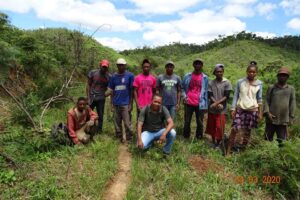
Restoring the rainforest in all its diversity requires great care and attention. Local people are employed in the planting, maintenance and protection of indigenous trees giving them a positive stake in the future of the forest. Ysouffa, who is in charge of Mitsinjo’s nursery and responsible for reforestation, truly understands about trees and local ecology and is passionate about maintaining and restoring wildlife habitats. With the Mitsinjo team, he has pioneered the innovative reforestation technique and Association Mitsinjo are considered reforestation experts in Madagascar:
-
-
-
Seeds and seedlings from 60-100 indigenous species are collected from the wild; divided into categories according to growth rates, and planted in the nursery
Tree species are selected according to various criteria including how popular they are with birds, fruit bats or lemurs. In fact, local wildlife plays an active role in the reforestation process by spreading seeds in their faeces
-
To grow successfully, each seedling requires the help of special fungi that live in their roots. These fungi must be collected from the soil of the primary forest under at least five different plant families and it takes about three months to grow enough fungi for 10,000 seedlings
-
Seedlings are nurtured and monitored in the nursery for up to eight months before they are ready to be planted out. During this time, the land is prepared for planting out
-
Seedlings are planted to emulate the natural variation of the primary forest
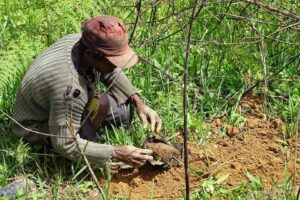
The newly planted areas are maintained (weeded and dead trees replaced) for at least the next three years, after which the new plants are strong enough to continue growing without assistance
-
Reforested areas are monitored in the long term
-
-
Training in Sustainable Agriculture
Since 2020, families from the hamlets of Sahatay and Sahakoa in the Torotorofotsy buffer zone, have benefitted from training in improved sustainable agricultural practices to reduce the need for slash and burn farming.
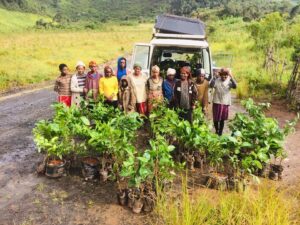
Training has included:
-
Sustainable techniques for cropping and livestock raising
-
Compost production
-
Establishing tree nurseries
-
Tree planting
-
Forest restoration
Each family has received the seeds, plants and equipment needed to establish more sustainable and productive agricultural systems. The families are benefiting from on-going technical support, and 430 fruit trees were planted by 23 families in the first 12 months. Five hundred quick growing timber trees were also planted in the same year.
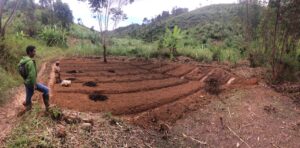
These benefit the families by
a) providing fruit as a source of nutrition and income, and
b) reducing the need to cut down the native forest for timber and firewood
Each year we plan to reach more families, helping to improve lives and decrease the pressure on the forest.
Environmental Education