Miala tsiny fa tsy mbola misy amin’ny teny malagasy ity lahatsoratra ity.
At least 38 people have been killed, and more than 12,000 forced to leave their homes, in one of Madagascar’s strongest cyclones of the last six decades.
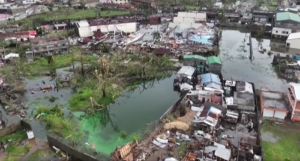
Cyclone Gezani made landfall in Madagascar on Tuesday (10th February 2026) and struck Toamasina, the largest Malagasy port city, with wind speeds of up to 155mph.
Madagascar’s National Office for Risk and Disaster Management (BNGRC) said on Thursday (12th February 2026) that it had recorded 38 deaths. Six people remained missing and at least 374 were injured. As many as 250,000 people are believed to have been affected.
More than 18,000 homes were completely destroyed, and at least 50,000 flooded or damaged, in the city of 500,000 people.
 Images from Toamasina show trucks blown over by the cyclone’s force, and trees uprooted from the ground. The cyclone wreaked further destruction across the western Madagascar Atsinanana region. The BNGRC said it was still carrying out assessments across the region.
Madagascar’s head of state, Colonel Michael Randrianirina, has declared the cyclone a ‘national disaster’ and said: ‘What happened is a disaster, nearly 75 per cent of the city of Toamasina was destroyed. The current situation exceeds Madagascar’s capabilities alone.’
Environment minister Max Fontaine Andonirina said: ‘As many as 250,000 people are affected or displaced as we speak. We are working to reach them, as roads have been blocked and damaged.’
The La Reunion branch of the World Meteorological Organisation’s CMRS (Regional Specialised Meteorological Centre for Tropical Cyclones) reports that Gezani is ‘one of’ the strongest cyclones to strike Madagascar since the ‘satellite era’ (when weather satellites began observing weather patterns to predict and record cyclones and tropical storms) began in the 1960s.
 Gezani’s path of destruction means that at least 52 Malagasy people have been killed by cyclones and storms in this year’s cyclone season, following 14 deaths late last month caused by cyclone Fytia, which injured or affected at least 54,000 more people.
As we noted then, cyclones and tropical storms are not new in Madagascar: the season comes every year, and lasts from November to April.
But climate experts report that the storms have increased in power and intensity in recent years, driven by climate change.
And the impacts of that – deaths, injuries and survivors losing their homes, possessions and farmland in Madagascar – are a particularly bitter irony because Madagascar is one of the world’s few ‘carbon sinks’, one of only four countries on Earth which emits less carbon than it absorbs from the atmosphere.
The Malagasy government is correct to call for international assistance to respond to the devastation wrought by cyclone Gezani, but the word can and must do more.
We are teetering on the brink of global climate catastrophe, and countries like Madagascar are those feeling the harshest effects of that catastrophe’s approach.
With your support, we are already working with Malagasy partner organisations and Malagasy people to support their efforts to protect their vital, vibrant, areas of wilderness, but they cannot – and should not be expected to – prevent global disaster alone.
We must come together to end practices which threaten us all, and are already killing and otherwise severely harming innocent men, women and children.
If you can, please:
-
share this story
-
refuse to buy products produced in ways harmful to the planet on which we live
-
and use your voice: tell others what you are doing, and why, and call on your elected representative to take a tougher stand against practices which threaten us all, and are already killing Malagasy men, women and children
Aid,
Biodiversity,
climate,
climate catastrophe,
climate change,
community,
conservation,
development,
displacement,
environment,
Environmental News,
farming,
global South,
livelihoods,
Madagascar,
Malagasy,
poverty,
rainforest,
Randrianirina,
Reunion,
Taomasina,
wildlife


 English
 Cymraeg
 Français