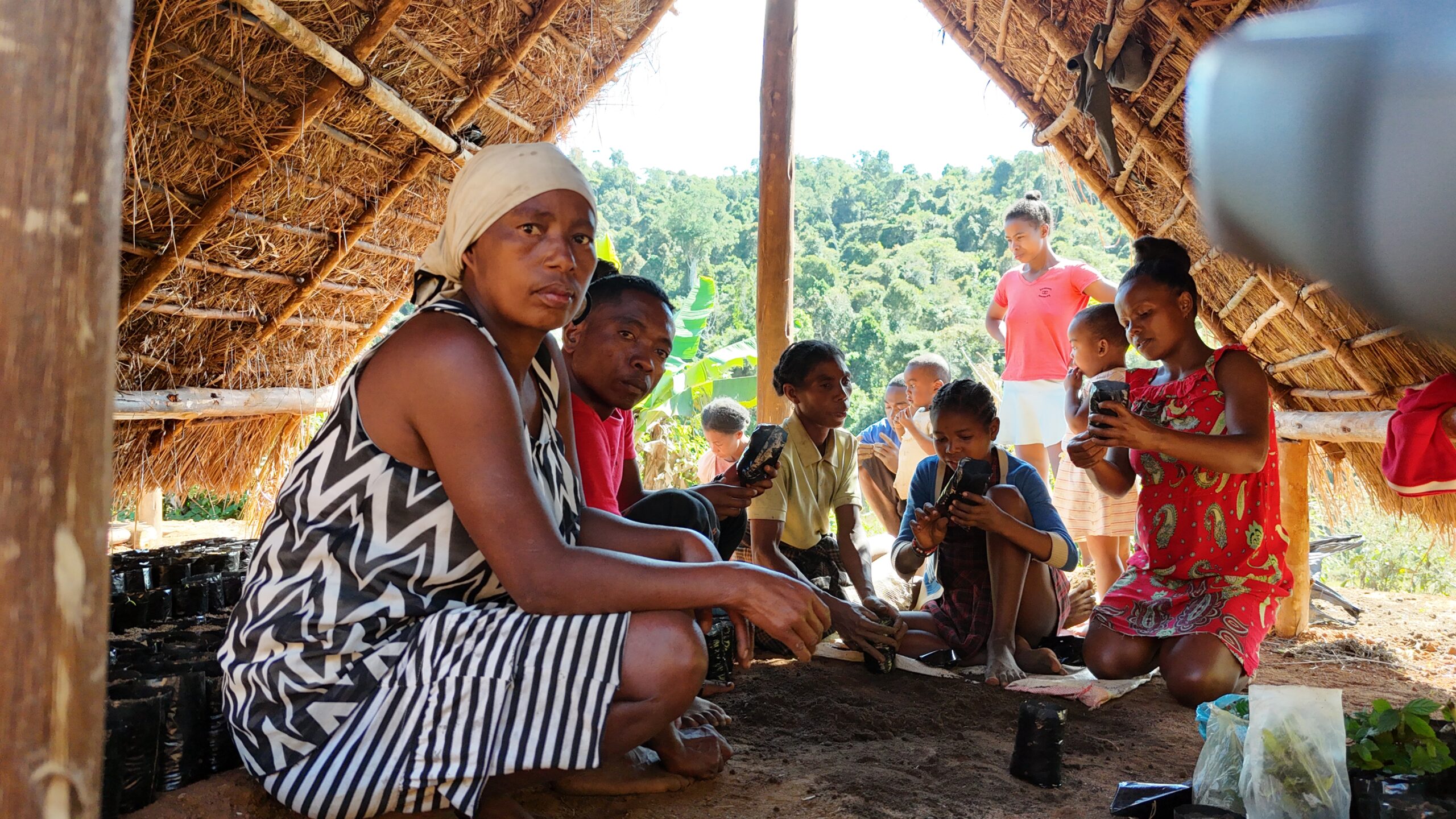
Where we work with community organisation Mitsinjo, in the Torotorofotsy Wetland, near the Andasibe Mantadia National Park, Money for Madagascar’s Resilient Forests and Livelihoods programme is helping Malagasy people improve their livelihoods and protect and promote the unique forest environment in which they live, using agro-forestry, training and education.
The Park is home to iconic, critically-endangered, species such as the golden mantella frog, the greater bamboo lemur and the black and white ruffed lemur, and has been seriously degraded in the last decades.
We know this cannot and must not continue. But we also know that this degradation has been caused by food shortage among Malagasy communities, in a country where 79.9 per cent of people live on or below the global poverty baseline of £1.73 per day.
Money for Madagascar and its partners are proving, however, that increased incomes and better standards of living can complement, rather than conflict with, protecting the environment upon which we all rely and are a part of, and the other plants and animals that live within it.
In 2024, in the forest communities of Betombotsirika and Behontsa, we have:
Replanted 27 hectares of unique indigenous forest, restoring habitat for Madagascar’s endangered lemurs
Created 10 local jobs in tree nurseries, producing the wide range of indigenous species needed for our vital reforestation work
Trained 40 families in sustainable agriculture, helping them develop agroforestry on their land, to improve household nutrition and restore local biodiversity
Trained the communities in environmental protection, including protecting newly planted trees and sustainable waste-disposal
Nirina Célestine Rasoamananjara, a farmer in Behontsa, said: ‘Before, I only grew one crop on my land, without any particular technique and harvests were poor. Since completing the training, my production has improved significantly. I grew various vegetables and legumes. From 10g of courgette seeds, I harvested 50kg, and 20 cups of beans gave 200kg. My income increased, because I can harvest diverse products throughout the year.’


 Malagasy
 Cymraeg
 Français