Our Resilient Forests and Livelihoods programme helps Malagasy people lift themselves from poverty and hunger, and to protect and expand the vibrant, vital Malagasy rainforest.
One way we do this is by providing food producers with the skills, equipment and information they need to practice Dynamic Agro-Forestry: an innovative new approach to farming which uses and heps the rainforest even as it produces more food than other methods.
An accident of birth means Malagasy people, including some living in severe poverty, find themselves charged not only with somehow keeping themselves and their families alive, but also with protecting some of the planet’s fertile and dynamic rainforest.
With two weeks until the start of the Green Match Fund campaign, in which your donation will be doubled, we look at the Dynamic Agro-Forestry project, an innovative farming approach which safeguards fertile soil, protects Madagascar’s vital rainforest and increases family incomes and food security.
The Green Match Fund begans on Tuesday 22 April and ran until 12pm on Tuesday 29 April.
During this period, all donations you made were doubled in value, thanks to our Champion Donor The Reed Foundation, and two ‘super pledgers’.
We are using it to give Malagasy people the skills, training, knowledge and equipment they need to increase farming production, protect fertile soil and protect Madagascar’s vital and unique rainforest, through our Resilient Forests and Livelihoods (RFL) programme.
RFL is vital, because:
79.9 per cent of Malagasy people live on or below the Global Poverty Baseline of £1.73 per day
80 per cent of Malagasy people rely on farming for their income and, in many cases, subsistence – farming as a means of survival
Although Madagascar is a ‘carbon sink’, removing more carbon from the atmosphere than it emits, the global climate crisis is hitting it hard: droughts and floods are ruining crops, and extreme rainfall is washing fertile soil into the sea
This poverty, and food shortage driven by weather damage and loss of soil, causes hunger – malnutrition causes stunting in nearly 50 per cent of Malagasy childrenunder five, and 40 per cent of Malagasy children never finish primary school, while others fail to achieve their potential because of hunger.
Under these circumstances, there is a clear temptation for Malagasy people to clear forest to gain more land to secure more food and increase incomes: indeed, Malagasy men, women and children deserve to live in reasonable comfort, free from hunger or worse.
But the Malagasy rainforest is also vital, playing a huge part not only in the lives of flora and fauna, more than 80 per cent of which is unique to Madagascar, including lemurs, amphibians, birds and other mammals, but also in the ongoing survival of every person on Earth.
Its protection, and the wellbeing and livelihoods of Malagasy people, are extraordinarily important, from a moral and a pragmatic viewpoint.
In many models of development, or of conservation, one or the other is regarded as and becomes, an unfortunate ‘loser’. Human livelihoods sadly suffer for the environment, or the environment must ‘give way’ to development. Under RSF, they are complementary.
One example is our Dynamic Agro-Forestry (DAF) project, which helps Malagasy people safeguard fertile soil, protect the rainforest, and increase incomes and food security.
Working with Malagasy farmers in the Tsinjaorivo rainforest, a hard-to-reach location where few organisations work, and a Rainforest Trust priority conservation site, DAF provides Malagasy people with training and equipment, including in developing natural forest- and forest-like systems which enable high biomass production.
DAF’s training helps increase yields through forest protection and growth, soil management, and ‘young cutting’ of rainforest plants to promote increased biomass production. It enables people to combat hunger and its results, even as they restore land and protect forests.
Fidèle Randriamitantsoa, a relay farmer in Sarodrano Tsinjoarivo, said: ‘Before adopting the DAF technique, agricultural production on my land was very low, because the soil was not very fertile. I lacked the means to buy chemical fertilisers, so my harvests were mediocre.
‘Training in DAF and seed technique, I learned to use organic fertilisers instead of chemical ones. I made vermicompost with half a cup of earthworms and produced 3m³ of fertiliser.
‘DAF proves it is possible to obtain good production even on a small surface. On a plot of land measuring 40x40m, I harvested 80 cups of beans from 17 sown cups. I also harvested 500kg of potatoes using vermicompost.’
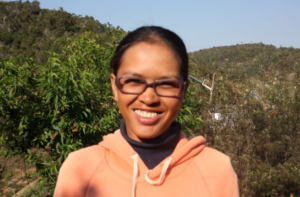
Ms. Harilala, a young leader and president of GEC Andranomangatsiaka, explained: ‘Before, I cultivated my plots in the traditional way, and if I had harvests, they were modest. I learned DAF techniques, and my yields have increased considerably.
‘I simply cultivated a large area without any further preparation. Soil management, including how to combat erosion, training, has helped keep my soil fertile.’
DAF is just one of many examples of the way Money for Madagascar – and the RFL programme – empowers Malagasy people to change their lives, lift themselves from poverty and hunger, and simultaneously protect and expand the Malagasy wilderness on which we all rely.
And you can help: together, we can benefit three groups: Malagasy men, women and children, Malagasy wildlife and plants, and every living thing on Earth, which relies on the rainforests for air, and to avoid and mitigate the worst impacts of the looming climate catastrophe.
Please donate using the buttons on this page, and share this web-page with friends, family members and colleagues


 Malagasy
 Cymraeg
 Français

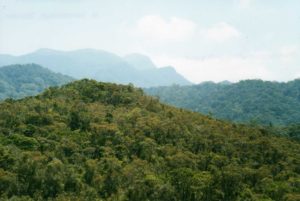


 But the Malagasy rainforest is also vital, playing a huge part not only in the lives of flora and fauna, more than 80 per cent of which is unique to Madagascar, including lemurs, amphibians, birds and other mammals, but also in the ongoing survival of every person on Earth.

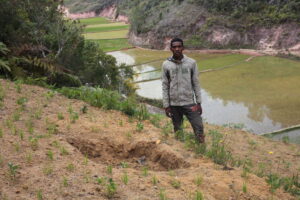 ‘Training in DAF and seed technique, I learned to use organic fertilisers instead of chemical ones. I made vermicompost with half a cup of earthworms and produced 3m³ of fertiliser.