English
 Malagasy
 Français
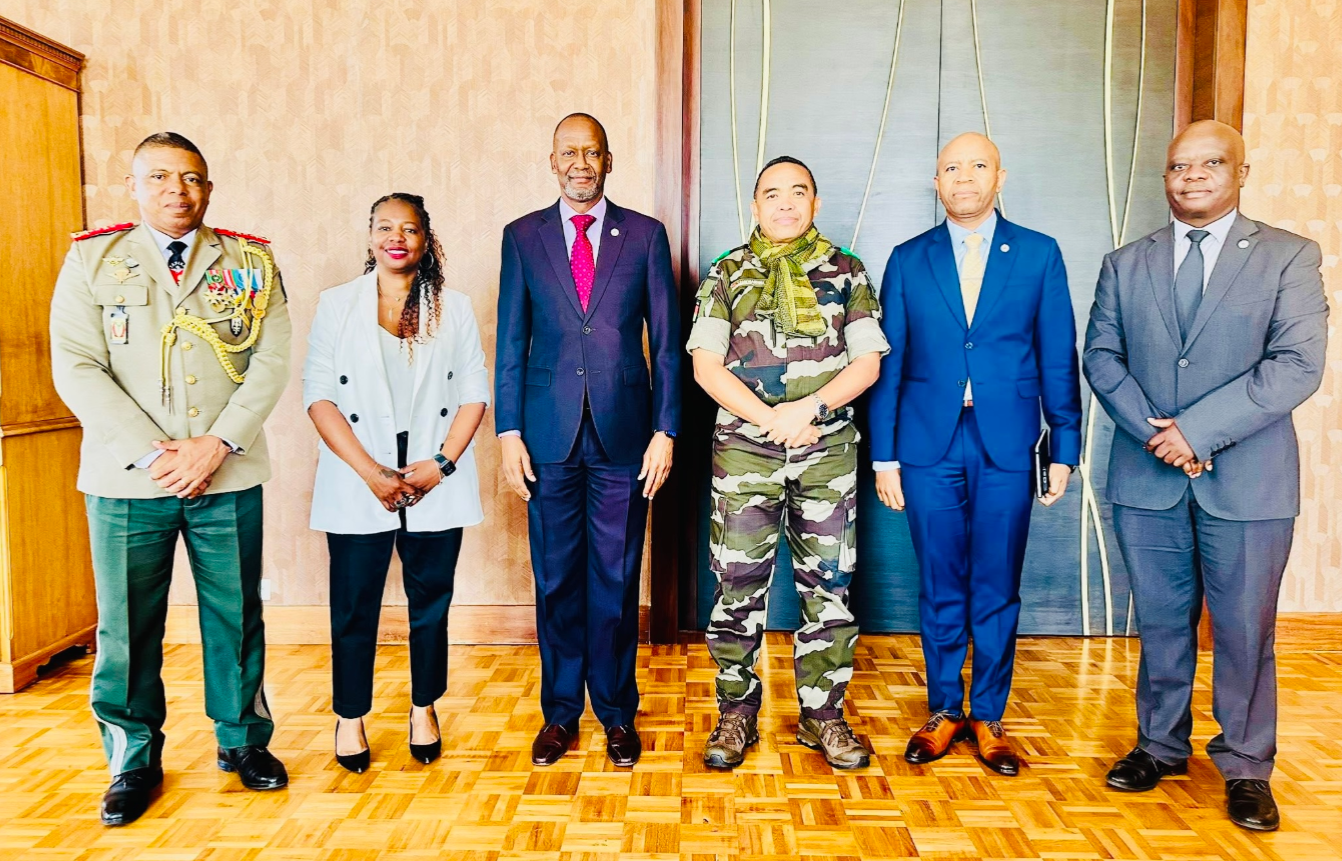
Madagascar may become a partner country of the BRICS group, following discussions with member state South Africa.
The Malagasy interim president Michael Randrianirina has told Russian media that the new status may be confirmed as early as the 18th BRICS summit, which will be held in India, most likely in June 2026.
 Randrianirina said the matter was discussed during his visit to South Africa, where he met the latter state’s president Cyril Ramaphosa, late ast week.
He said: ‘Cyril Ramaphosa agreed to our request to help Madagascar become a BRICS partner state. I expect to attend the summit in India, and it could be announced there if things go well.’
It would make Madagascar the fourth BRICS African partner country, joining Algeria, Nigeria and Uganda.
BRICS describes itself as a ‘political and diplomatic forum, a group, or a coordination and cooperation mechanism among countries of the Global South.’
It was first comprised of just four member states – Russia, China, India and Brazil – with South Africa joining in 2010 (and providing the fifth letter of the group’s name).
Since then, Egypt, Ethiopia, Iran, UAE, and Indonesia have joined as full members.
Ten countries – Belarus, Bolivia, Kazakhstan, Nigeria, Malaysia, Thailand, Cuba, Vietnam, Uganda, and Uzbekistan – have joined as ‘partners’, who can participate in the group’s Chancellors and Leaders Summit, and can be present at other meetings if full members agree.
The BRICS group, which currently includes more than a quarter of the world’s economy and half of its population, says it aims to: ‘reform global governance institutions and promote sustainable development, advocate for a more just, democratic, and balanced international order, and widen global cooperation in areas such as geography, economics, trade, energy, and food, expanding partnerships and strengthening cooperation for development.’
Though some economists have raised concerns that the group’s Russian origins may indicate an effort or hope to attack or undermine current economic relationships, without providing improved alternatives.
Following the meeting in South Africa, Randrianirina hosted Elias Magosi, Executive Secretary of the Southern African Development Community (SADC) in Antananarivo, in what appears to be the first official recognition of Madagascar and its transitional government since Randrianirina took temporary office following public uprisings which deposed previous president Andriy Rajoelina.
The SADC accepted Randrianirina’s request, in the wake of the coup and new administration’s creation, to remove Madagascar from its year-long presidency of the council. It placed South Africa in temporary charge from Friday 7th November 2025.
An SADC statement released on Tuesday (20th January 2026) said: ‘The meeting reaffirmed SADC’s continued engagement with Madagascar and focused on key regional priorities, including regional integration, infrastructure development, climate change, peace and security, and economic transformation.’
The organisation’s statement also noted the importance it is placing on full elections being held in Madagascar: ‘The Executive Secretary and the President exchanged views on Madagascar’s national transition, including the ongoing inclusive national dialogue process aimed at constitutional reforms and the organisation of future elections.’
At his investiture as transitional president in October 2025, Randrianirina pledged that there would be full governmental and presidential elections in Madagascar in the proceeding 18 months to two years.